
What Are Pharmaceutical Excipients? Types and Functions
Excipients are the non-active ingredients that shape a medicine. Learn the main types, what each does, and what to check when sourcing them.
· UniPharma
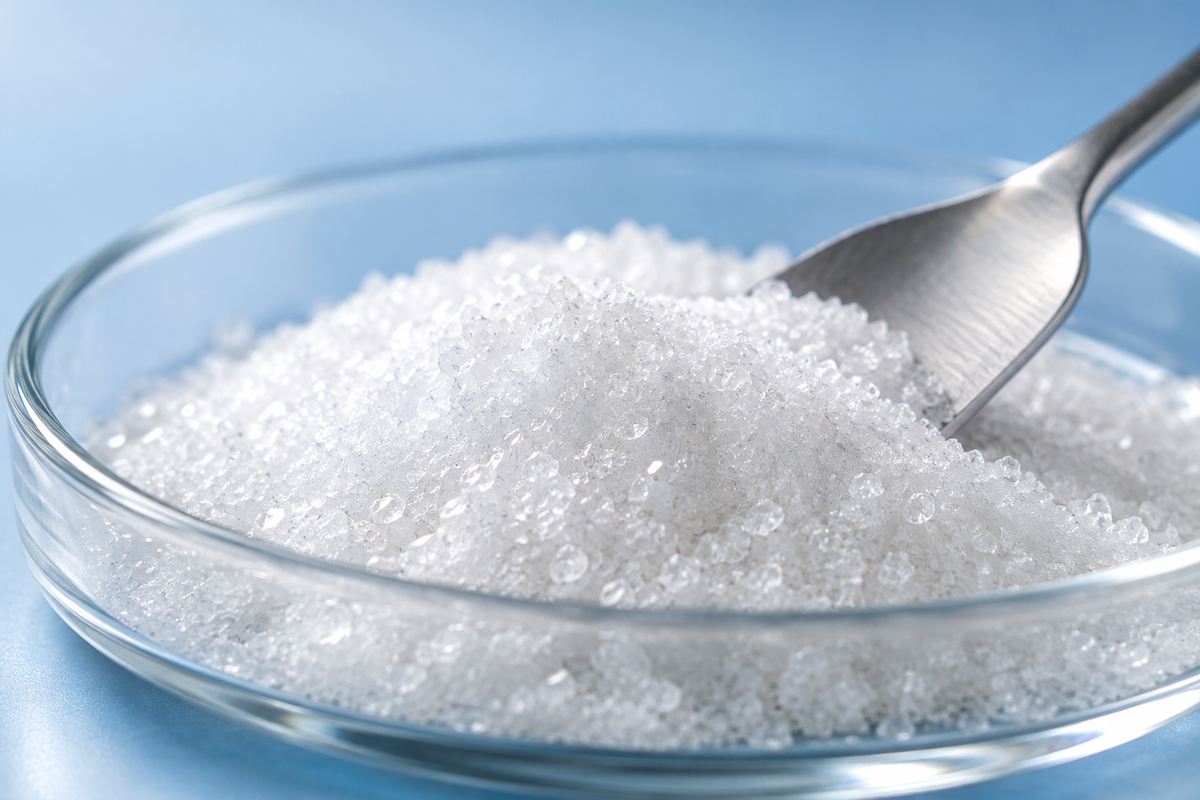
Pharmaceutical excipients are the components of a dosage form other than the active ingredient. They give the product its shape, stability, taste, release behaviour and manufacturability. The main groups are fillers, binders, disintegrants, lubricants, coating materials, solvents and bases, thickeners, sweeteners and preservatives.
What an excipient is
An active pharmaceutical ingredient (API) rarely reaches the patient on its own. It is usually a few milligrams of powder that has to be turned into a tablet, a capsule, a syrup, an ointment or an injection. The materials that make that possible are excipients.
They are often called inactive ingredients, but that does not mean they are irrelevant. A binder that is too weak makes a tablet crumble, and a lubricant that is used badly can slow its dissolution. Choosing excipients is a formulation decision, not a shopping-list item.
The main functional groups
Excipients are normally grouped by what they do in the product:
- Fillers and diluents add bulk so a small dose can be handled and pressed: lactose, mannitol, microcrystalline cellulose (MCC), starch.
- Binders hold particles together: PVP K30, HPMC, pre-gelatinized starch, gelatin.
- Disintegrants help a tablet break apart in the body: croscarmellose sodium, sodium starch glycolate.
- Lubricants and glidants improve flow and stop sticking to tooling: magnesium stearate, sodium stearyl fumarate, colloidal silica (Aerosil).
- Coating materials protect, mask taste or control where a tablet releases: methacrylic acid copolymers, triethyl citrate, shellac.
Excipients for liquids and semi-solids
Syrups, suspensions, creams and ointments depend on a different set of materials. Solvents and co-solvents such as propylene glycol and glycerin dissolve or carry the active. Thickeners such as carbomer, xanthan gum, HPMC and sodium CMC give viscosity and suspension stability. Emulsifiers and waxes build creams, while petroleum jelly, liquid paraffin and lanolin form ointment bases. Sweeteners (sorbitol, sucrose, aspartame), flavours and preservatives complete oral liquids.
Parenteral and powder products add further needs: buffering salts such as citrates, tonicity agents such as sodium chloride and dextrose, and chelating agents such as EDTA.
What to check when sourcing
Whatever the function, a few questions apply to every excipient:
- Grade: is it pharmacopoeial (for example BP, USP or Ph. Eur.) or a technical grade? Say which one your registration requires.
- Compatibility: does it react with your active? Lactose, for example, can interact with some amine-containing actives.
- Documents: certificate of analysis, safety data sheet and, where relevant, origin or allergen information.
- Consistency: the same specification from batch to batch matters more than a single good lot.
Our excipients range covers materials for liquids and ointments, tablets and capsules, and powders and parenterals, so one inquiry can cover a full formula.
Matching the excipient to the dosage form
Start from the dosage form and work backwards. A chewable tablet needs a sweet, non-gritty filler. A coated tablet needs a polymer that suits the target release site. A cream needs a stable emulsifier system. Writing the function next to each line of your formula is the quickest way to spot gaps before you request prices.
Common mistakes when selecting excipients
Most excipient problems are avoidable and appear when a formula moves from the bench to production. A grade that behaved well in a ten-gram trial can flow differently at full scale, and a substitute that looks identical on paper may not match the original in particle size or viscosity.
- Changing the supplier or grade without repeating compatibility and stability work.
- Ordering by trade name only and receiving a different grade or salt form.
- Ignoring moisture content, which affects flow, storage and sometimes the stability of the active.
- Adding more of a functional excipient hoping to fix a process problem that has another cause.
- Forgetting that preservatives, sweeteners and colours also count as excipients and need the same documentation.
A short written specification for every excipient, kept with the formula, prevents most of these. When a change is unavoidable, treat it as a small project: test, document and only then approve.
If you are unsure where to begin, list the dosage form, the route of administration and the market you are registering in. Those three facts shorten the list of suitable excipients dramatically.
FAQ
Are excipients really inactive?
They are pharmacologically inactive at the dose used, but they affect stability, dissolution, taste and manufacturing. That is why they must be chosen and specified carefully.
Do I need pharmacopoeial grade?
If your product is registered, the registered specification decides. Technical grades are not interchangeable with pharmacopoeial ones unless your documentation allows it.
Can one excipient do several jobs?
Yes. Microcrystalline cellulose can act as filler and binder, and some starches act as binder and disintegrant, depending on grade and level.
Can I request several excipients in one inquiry?
Yes. List every material you need with the grade and quantity, and the quotation can be prepared together.
Ready to price your formula? send us your inquiry with the materials, grades and quantities, and we will reply with availability and terms.
Read next
 Detergent Raw Materials: Thickeners and ChelatorsA detergent is more than surfactant. Here is what thickeners, chelators, pH adjusters and preservatives add to a cleaning formula.Vitamin and Nutraceutical Raw Materials ChecklistVitamins and probiotics are sensitive ingredients. This guide lists what formulators verify before they approve a raw material.
 Water Treatment Chemicals: Biocides, Antiscalants, PACWater treatment chemicals each solve a different problem. This overview explains biocides, antiscalants, coagulants and bleaching powder.
Need this material?
Send your list and quantities — we reply with a written quotation.